
This post may contain affiliate links. Please read our disclosure policy.
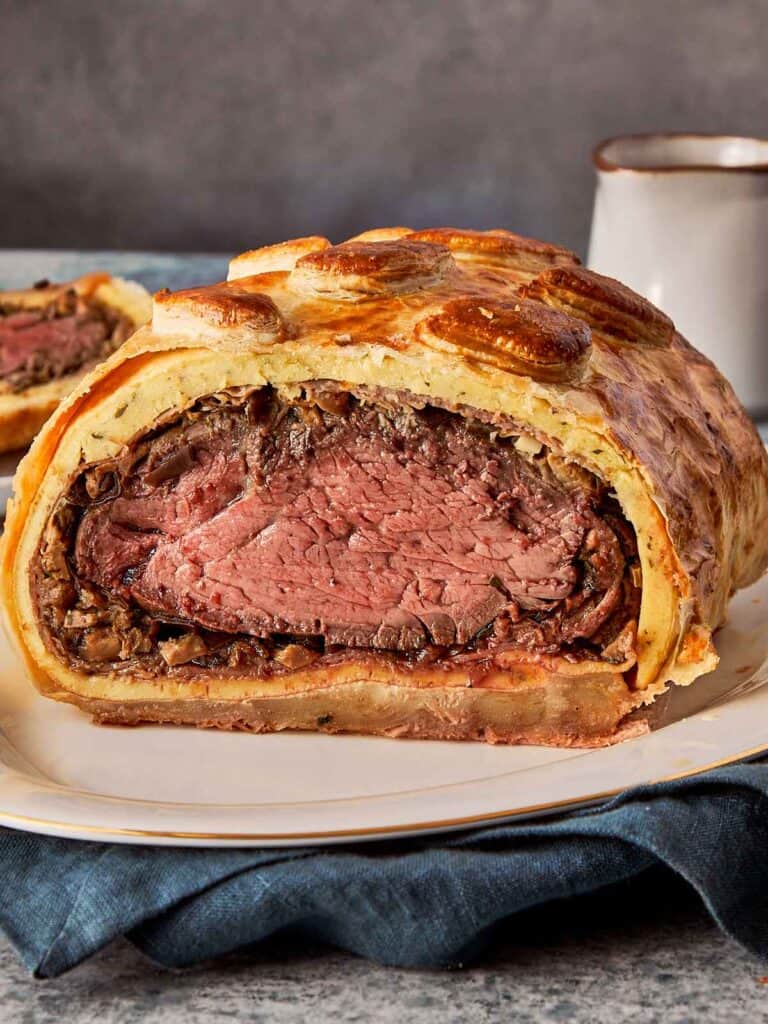
One of the most mouth watering, beautiful and downright delicious meals i’ve ever made! Puff Pastry, Duxelles (mushroom, onion herb mix) and the most juicy, medium rare tenderloin of your life!
If you’ve already fallen in love with my Steak with Creamy Garlic Shrimp, this Beef Wellington is the ultimate upgrade for your next fancy dinner. It’s a classic English dish with French techniques that no one REALLY knows the history behind, but whoever made this beauty for the first time. Hats off. Now this recipe may seem intimidating, expensive and technically tricky. But here is the thing… I live for taking the scary stuff and breaking it down until it’s easy enough for a Tuesday (okay maybe Saturday).
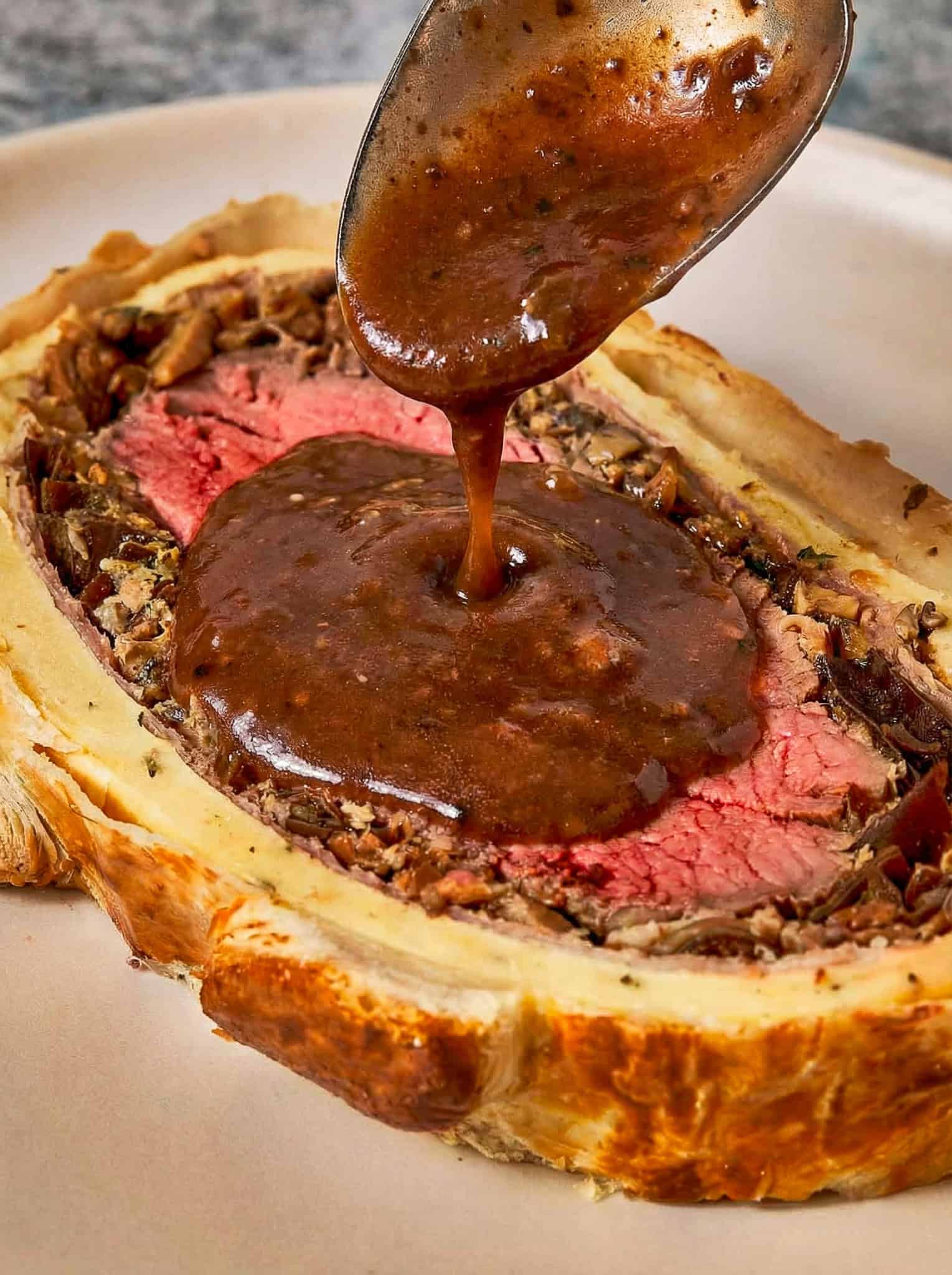
Table of Contents
- Why this recipe works (and why you can do it!)
- The 5 Essential Layers of a Wellington
- Key Tips for Success: Please read before starting.
- Everything You Need and Why It Matters
- Variations & Substitutions
- Detailed Step By Step Masterclass
- What to serve with Beef Wellington
- Common FAQ’s
- Beef Wellington with Truffle Red Wine Sauce Recipe
Why this recipe works (and why you can do it!)
There are very few adaptations that should be made to a good Beef Wellington, the traditional recipe is famous and for good reason. What I can do though is pair it with the best sauce I can possibly make to compliment it and make sure it’s filled with truffle. Most people are terrified of ruining a brilliantly expensive piece of beef. I get it. But after testing this rigorously, I’ve found the specific steps that ensure success.
So when I made this the first time (without a sauce) all I could think of was how well truffle would pair with it, so, I made a red wine and Truffle sauce and OH MY GOSH, it really is exactly what I had in my mind, hopefully you get the same enjoyment out of this as I do.
The secret to this recipe lies in moisture control. I am using a mushroom duxelles (that is a French preparation method used as stuffing) cooked until bone dry, and a thyme crepe layer that protects the pastry.
The 5 Essential Layers of a Wellington
To make this recipe work, you need to understand that what’s on the inside matters. Just like an onion, this Welli has many layers.
- The Tenderloin (Filet Mignon) I use the center cut (the Chateaubriand) because it’s uniform in size, ensuring it cooks evenly.
- The Duxelles A fancy Drench word for “mushroom cooked down to a paste.” This adds an umami bomb of flavor. My absolute favorite.
- The Prosciutto This adds saltiness, but more importantly, it acts as a moisture barrier. Prosciutto di Parma (Parma Ham) is the best to use. Avoid the pre-packaged packets in the fridge aisle if you can. Go to the deli counter and ask them to slice it wafer thin (freshly sliced) as this will ensure it’s not chewy and rip or tear your beef Wellington when you slice it.
- The Thyme Crepe. Don’t skip this step. The Crepe absorbs any juices released by the beef, ensuring your puff pastry stays flakey, not wet.
- The Puff Pastry. Use All-Butter Puff Pastry. Most cheap puff pastry found in the freezer aisle is made with vegetable oil, shortening, or margarine, which will give you a waxy, greasy film in your mouth, but butter pastry is rich and melts in your mouth. Butter pastry melts faster than oil pastry, only take it out of the fridge right when you are ready to wrap the beef.
Key Tips for Success: Please read before starting.
- Fresh vs. Dried Mushrooms
While you can use dried, I highly recommend fresh Cremini or Swiss Brown mushrooms. They have a better texture for the duxelles. We are pulsing them in a food processor to get a fine, sand-like texture. If you don’t chop them fine enough, your roll might be lumpy.
- The Chill is The Thrill
You cannot rush this. You need to chill the beef log before puff pastry goes on.
Why? If the beef is warm, it will melt the butter in the puff pastry before it hits the oven. Cold beef = flaky layers.
- The Chocolate Secret
In the sauce recipe below, you’ll see a square of dark chocolate. It sounds strange, but this is an old chef’s trick. It doesn’t make the sauce sweet rather, it gives it a deep, velvety color and a gloss that butter alone can’t achieve. I learnt this while travelling around Mexico.
Everything You Need and Why It Matters
A Beef Wellington is the sum of its parts. Because there are so few ingredients, there is nowhere to hide; quality is everything here. Here is exactly what to look for at the grocery store to guarantee a 5-star result.
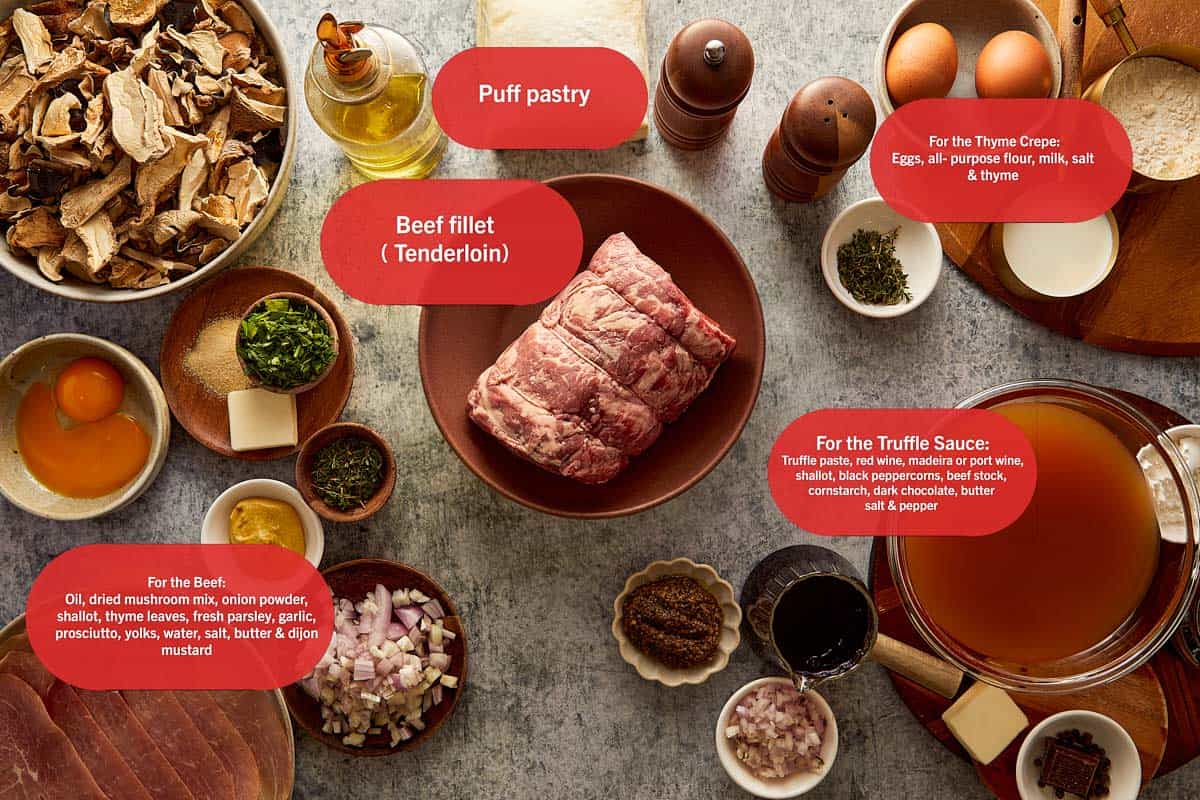
- The Beef This is the splurge ingredient, so let’s get the right one. You want the Center Cut of the beef tenderloin (often called the Chateaubriand). A whole tenderloin has a thick end and a skinny tail. If you use the whole thing, the tail will be overcooked before the thick end is ready. We use the center cut here for that uniform shape. Unlike Steaks with Chimichurri where a skirt or flank works great, a Wellington demands the tenderness of a filet mignon, ensuring every slice is a perfect, medium-rare pink from edge to edge. I found this one in a butcher. Ask your butcher to trim the silverskin (the white tough strip) and the chain (the fatty side muscle) so you have a clean barrel of meat.
- Puff Pastry Must be All-Butter Puff Pastry. If there is one rule you follow from this recipe, let it be this: Look for Butter in the ingredients list. Look for Dufour (USA), or Jus-Rol All Butter (UK), Carême (Aus).
- Prosciutto some people use pancetta in stead, it’s not common though, the reason it’s used is because it makes a moisture barrier between the meat and the pastry, meaning you can cook the pastry without overcooking the meat within.
- Truffle To get that earthy luxury without spending hundreds of dollars on a fresh truffle, we use a jarred Black Truffle Paste (salsa tartufata).
- Mushrooms While some recipes use dried, I find fresh mushrooms provide the best texture for the duxelles. Mushrooms are like sponges, they are 90% water. Water is the enemy of crispy pastry. We chop these finely and cook them down until they become a dry, intense mushroom paste. This concentrates the flavor and ensures your pastry stays flaky, not soggy.
- Dijon Mustard I brush the seared beef with Dijon mustard while it rests, this is not just for flavor, It acts as an adhesive, helping the mushroom mixture stick to the beef.
- Wine The best wine to use is a Cabernet Sauvignon from California or Washington State. American Cabs (unlike French ones) tend to be riper, fruitier, and have stronger vanilla notes from American oak barrels. When you reduce it, that ripe fruitiness concentrates into a rich, almost sweet glaze that balances the salty prosciutto and earthy mushrooms perfectly. It won’t turn sour or bitter like some cheaper, highly acidic European table wines might. My tip is to stay in that perfect $10–$15 Cooking + Drinking sweet spot. Avoid Generic American Table Wine labels, they are often too sweet and watery. Top picks Josh Cellars (California) or Columbia Crest H3 (Washington).
Note: Find the full list of ingredients and measurements in the Recipe Card.
Variations & Substitutions
Cooking is about making it work for your table. If you have dietary restrictions or just want to mix things up, here are my tested recommendations.
- Alcohol free – Replace the Red Wine and Madeira with an equal amount of high-quality Beef Stock (low sodium is best so you can control the salt) add 1 tablespoon of Balsamic Glaze or Worcestershire sauce, and a splash of Pomegranate juice (optional) for color. The dark chocolate step becomes even more important here to add that “aged” flavor profile!
- No Pork Version – The prosciutto is traditional, but if you don’t eat pork, you can use Bresaola to maintain that moisture barrier. This is air-dried salted beef. It looks and acts exactly like prosciutto but is 100% beef. It’s the perfect substitute found in the deli or refrigerated sections of your large grocery stores.
- Hate Mushrooms? Traditional French versions use smooth Liver Pâté or Foie Gras. It’s incredibly rich, so use a thinner layer than you would with mushrooms. If that’s not an option use Caramelized Onions. Slowly caramelize onions until they are dark, jammy, and dry. Blitz them in a food processor with chestnuts for a festive, sweet-and-savory filling. You will need 3-4 large onions about 1 oz (500g) worth.
- Need a chicken option for guests who don’t eat red meat? My Mozzarella Chicken in Tomato Sauce is a crowd-pleaser that is easy to whip up alongside this masterpiece.
Detailed Step By Step Masterclass
Don’t look at this as one giant recipe. Think of it as three manageable stages. I highly recommend completing the prep stage in the morning (or even the night before) so everything is perfectly chilled and ready for assembly.
The prep work
The goal here is to get all your hot elements cooked and then completely cooled down. Remember that heat is the enemy of puff pastry until it hits the oven.
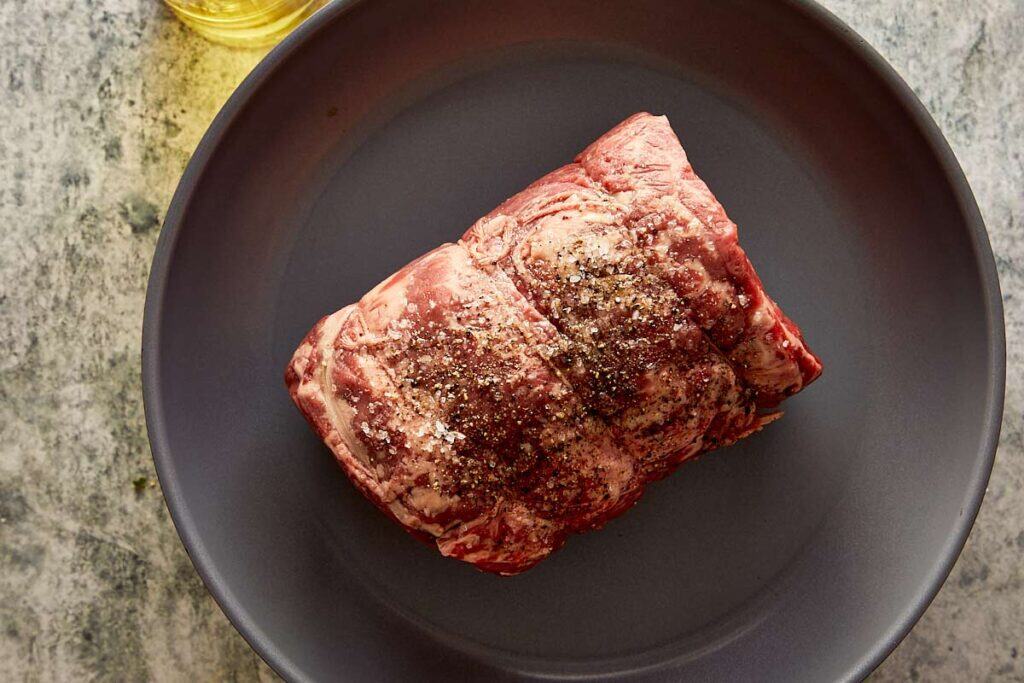
- Sear the Beef Pat your beef tenderloin dry with paper towels. Coat it lightly with oil and season aggressively with salt and pepper. Get a frying pan smoking hot over high heat. Sear the beef quickly. Just 30 seconds per side, including the ends until nicely browned. You are not trying to cook the inside here, you just want color on the outside. Crucial Step: Remove the beef from the pan and set it aside to cool completely. Once it is cool to the touch, brush the entire surface generously with the Dijon mustard.
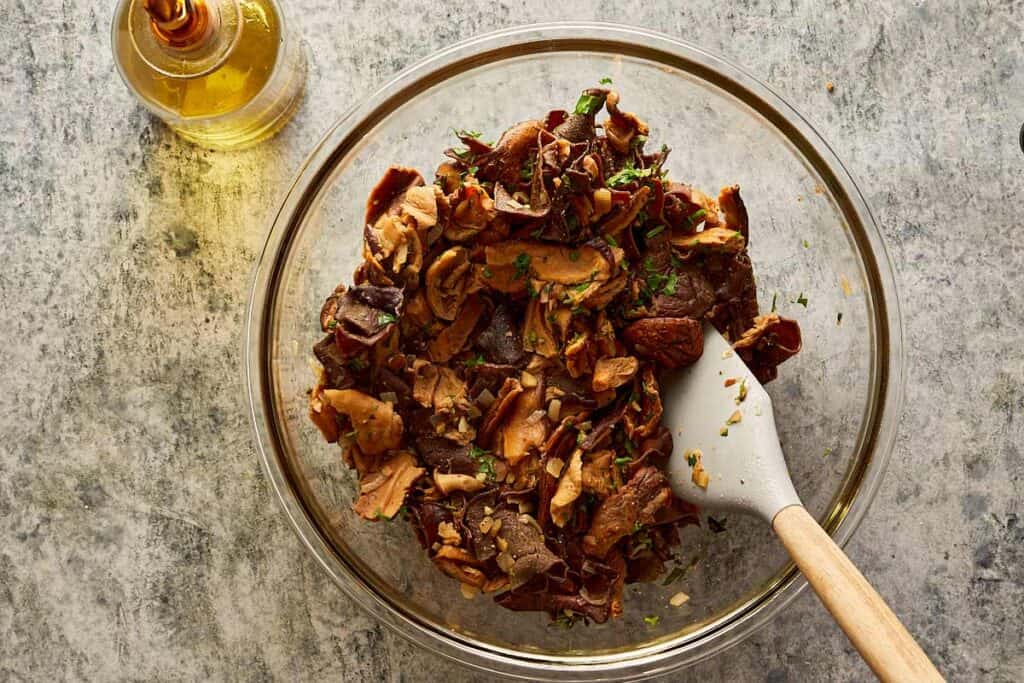
- The Duxelles (The Mushroom Paste) This is where you prevent a soggy bottom. Clean your fresh mushrooms and place them in a food processor. Pulse them until they are finely chopped, resembling coarse sand or breadcrumbs. (Do not puree them into a liquid soup!). Melt the butter in a large pan over medium heat. Add the processed mushrooms, shallots, garlic paste, onion powder, thyme, salt, and pepper. Cook this mixture slowly, stirring occasionally for about 20 minutes. You are done when the mushroom mixture is a dark, thick, bone-dry paste and starts sticking slightly to the bottom of the pan. If you see any liquid bubbling, keep cooking. Stir in the fresh parsley, transfer to a bowl, and refrigerate until completely cold.

- The Thyme Crêpe This thin pancake is my secret weapon against soggy pastry. It acts as a final sponge between the juicy meat and the crispy dough. Whisk the eggs, flour, milk, salt, and chopped thyme in a bowl until perfectly smooth.
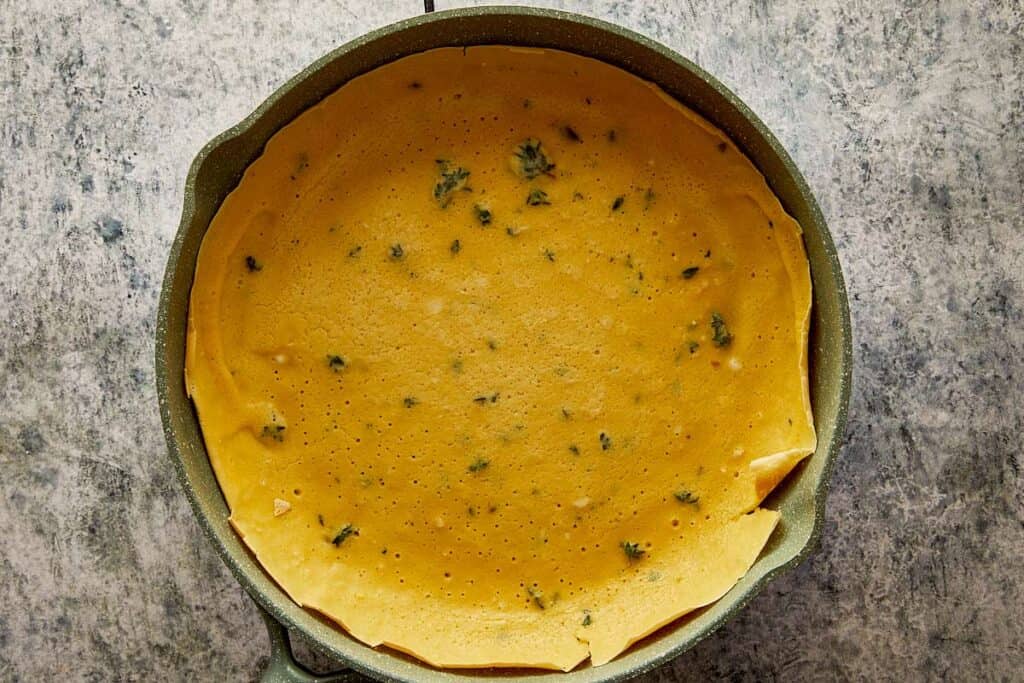
- Make the Crepe Heat a little oil in a large, non-stick pan over medium heat. Pour in enough batter to swirl around and create one large, thin crêpe (like a slightly thicker tortilla). Cook for 1-2 minutes until set, flip briefly, then remove to a plate to cool.
The Assembly
Now that everything is cold, we build the layers. You need a clear workspace for this.
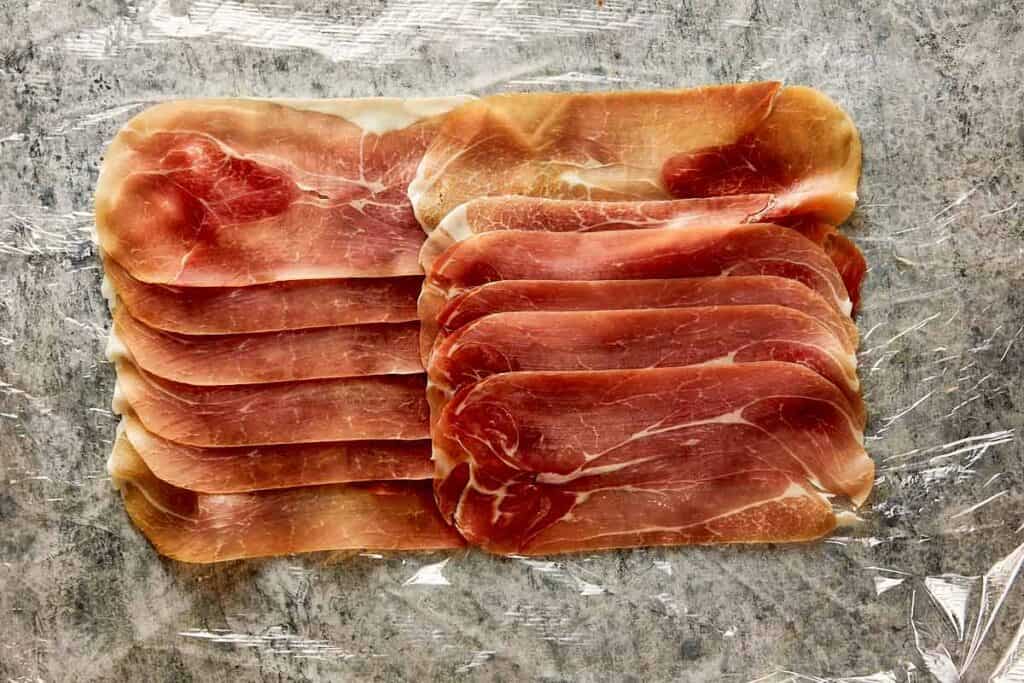
- The Prosciutto Layer Lay out a large sheet of plastic wrap (cling film) on your counter. Make it about double the length of your beef. Arrange the prosciutto slices on the plastic in two rows, slightly overlapping each other, to form a rectangle large enough to wrap around the whole tenderloin.
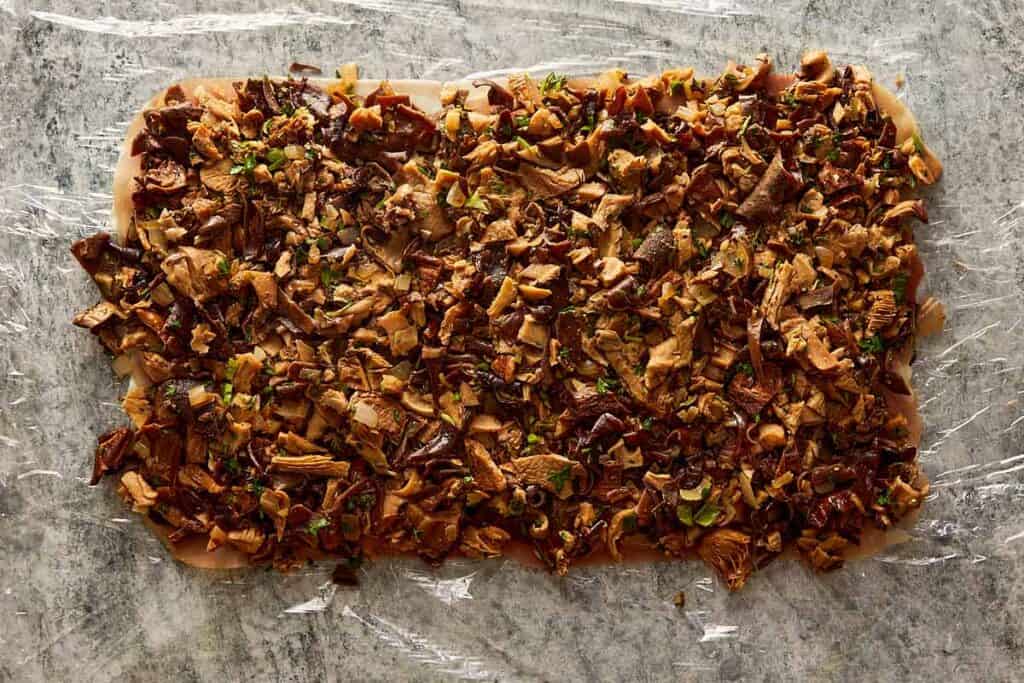
- Spread the Duxelles Using an offset spatula or the back of a spoon, spread your cold mushroom paste evenly over the prosciutto rectangle, leaving a small 1-inch border along the top edge.
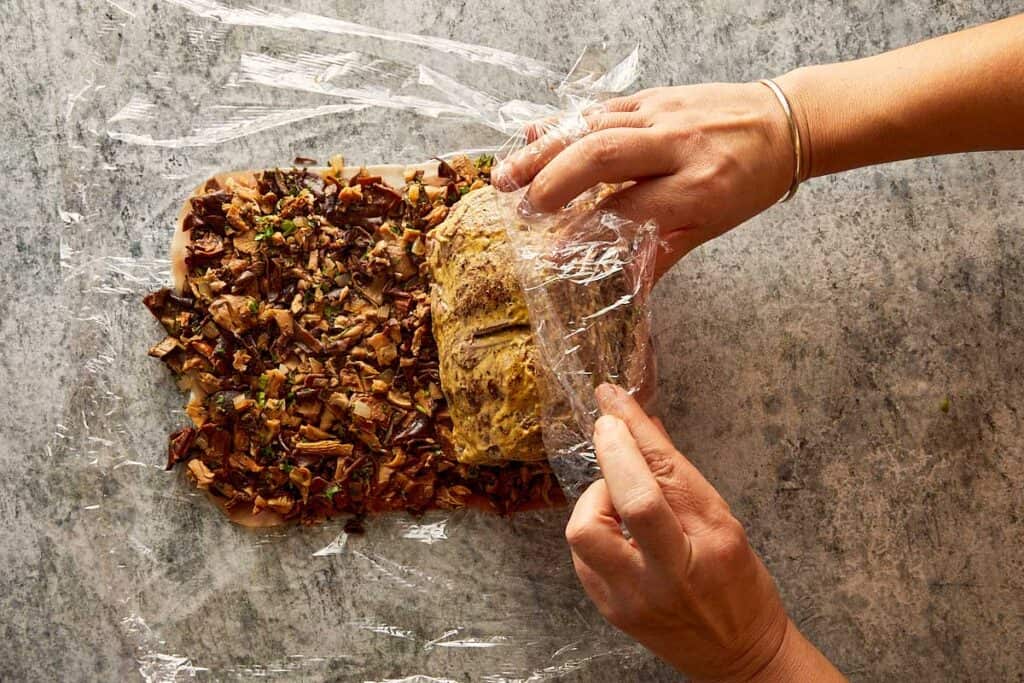
- The First Roll (Meat & Mushroom) Place your cooled, mustard-coated beef at the very bottom edge of the prosciutto layer. Using the plastic wrap to help you lift, roll the beef tightly forward, wrapping it in the prosciutto and mushrooms. Once rolled, twist the ends of the plastic wrap tightly (like a giant piece of candy) to compress the log into a tight, uniform cylinder. Crucial step Place this log in the fridge for at least 1 hour. This sets the shape.
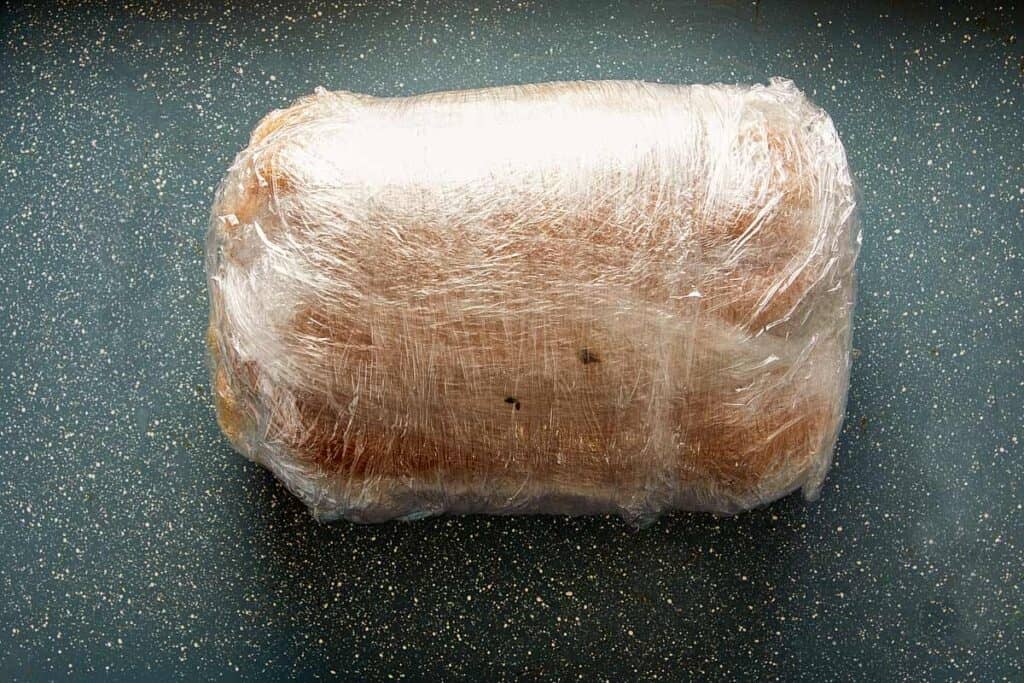
- The Crêpe Roll Unwrap your chilled beef log. Lay out a fresh sheet of plastic wrap and place your thyme crêpe on top. Place the beef log at the bottom of the crêpe and roll it up snugly. (Trim excess crêpe if it overlaps too much). Wrap tightly in plastic again. Refrigerate for another 30 minutes to 1 hour. Do not skip this. The beef must be stone cold before the next step.
The Bake & Finish… Showtime
It’s time for the puff pastry. Work quickly here so the butter in the dough doesn’t melt.
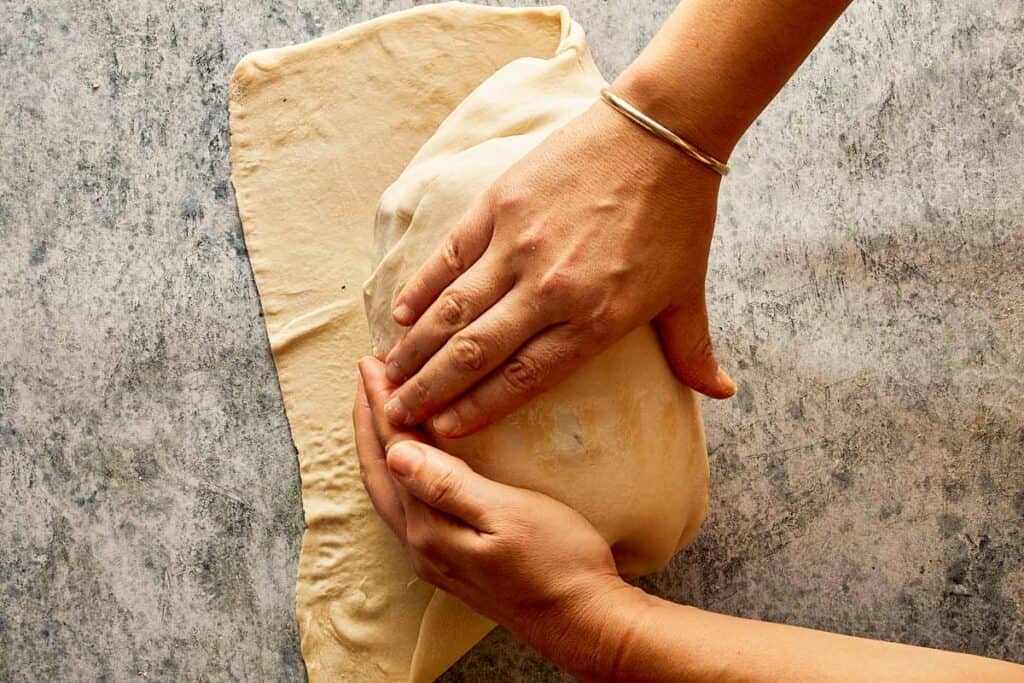
- The Final Wrap (Puff Pastry) Roll out your thawed all-butter puff pastry on a lightly floured surface just enough so it will encase the log. Remove the plastic from your beef log and place it in the center of the pastry. Brush the edges of the pastry with a little egg wash (the “glue”). Roll the pastry tightly around the beef, overlapping the seam by about 1 inch. Trim off any excess bulky pastry at the ends and tuck them underneath neatly. Place the Wellington, seam-side down, on a baking sheet lined with parchment paper.
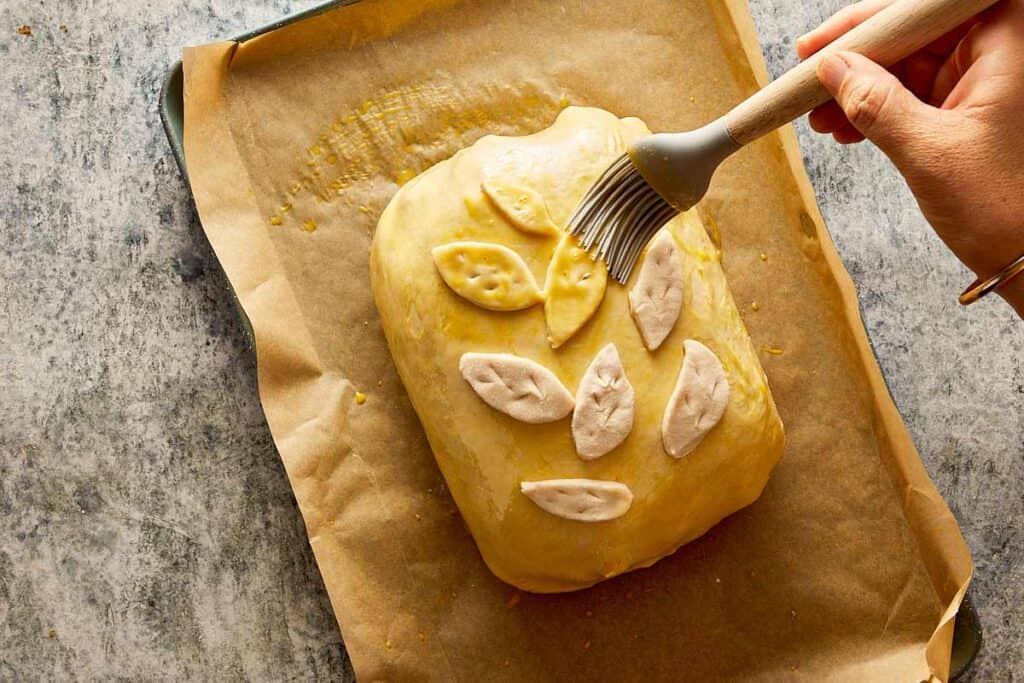
- Egg Wash & Decorate Brush the entire surface of the pastry generously with your egg wash (this gives it that lacquered shine). Optional Flair: You can add some cut out pastry leaves on top for decoration using a fork to make imprints on the leaves. Otherwise my favorite option is to use a Pastry Lattice Roller Cutter you can get from Amazon. See my video on how to make this the easy way.
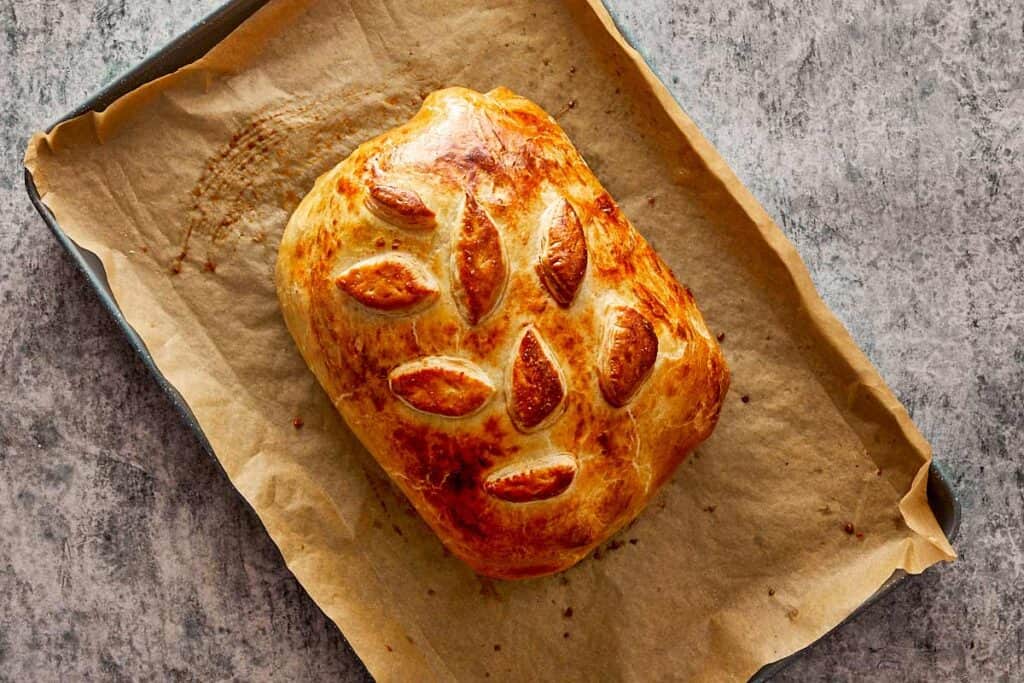
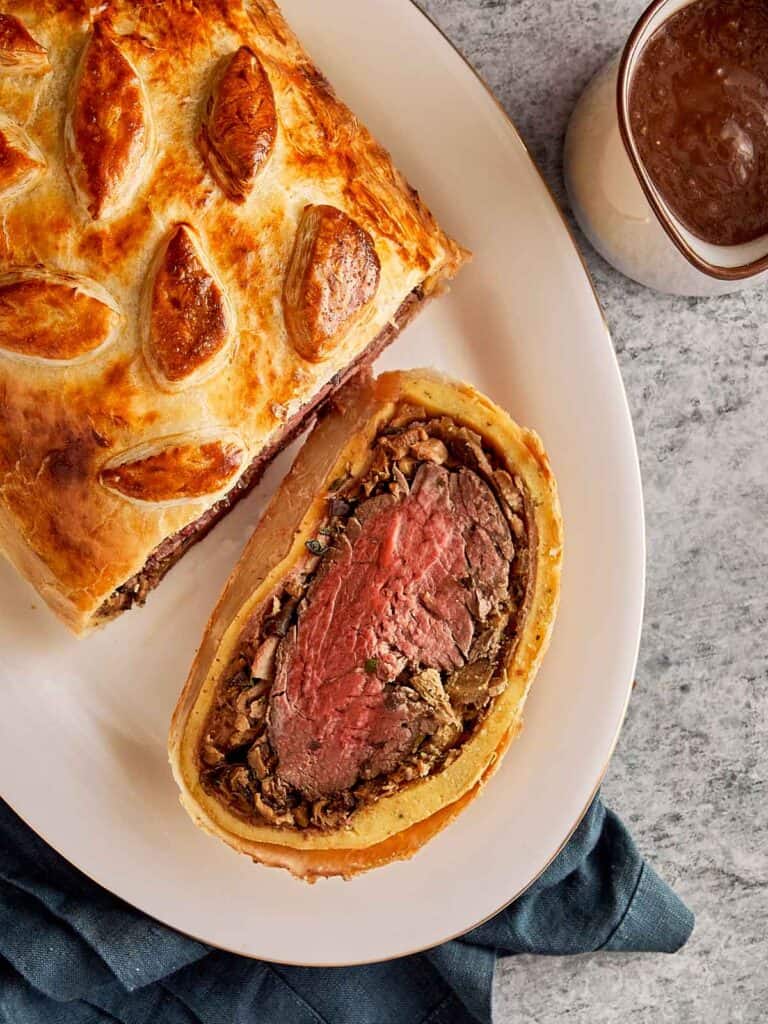
- The Bake Preheat your oven to 400°F (200°C). This is a two stage process. Put the Wellington in the hot oven and bake for 15 minutes to puff the pastry rapidly. Then, drop the temperature to 350°F (180°C) and continue baking for another 25–35 minutes until the pastry is deep golden brown. My tip for a perfectly tender medium-rare, pull the Wellington out when an internal meat thermometer inserted into the very center reads 125°F to 130°F (52°C – 54°C).
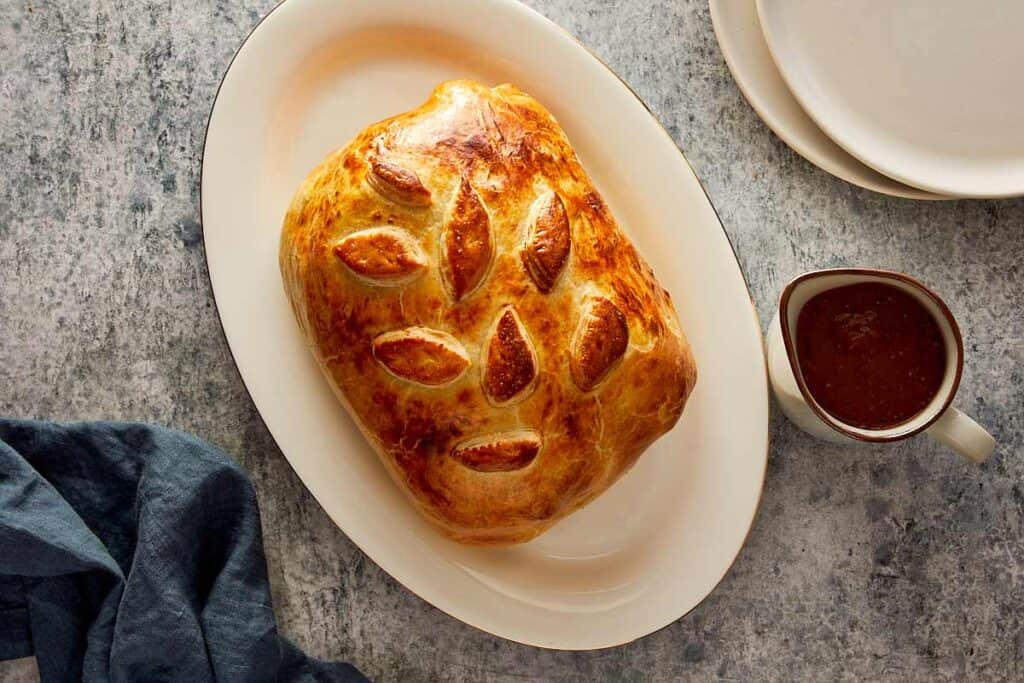
- The Hardest Part: Resting Remove the Wellington from the baking sheet to a wire rack. You must let it rest for at least 15 minutes before slicing. If you cut it now, all the juices will run out onto the board instead of staying in the meat.

- The Truffle Red Wine Sauce While the beef rests, make the sauce. In a saucepan, combine the red wine, Madeira/Port, shallot, and peppercorns. Boil hard until the liquid is reduced by about three-quarters (it should look syrupy). Add the beef stock and boil for another 3 minutes. Strain the sauce through a fine-mesh sieve into a clean pan; discard the solids. Mix the cornstarch with a splash of cold water to create a slurry, then whisk it into the simmering sauce until it thickens enough to coat a spoon.
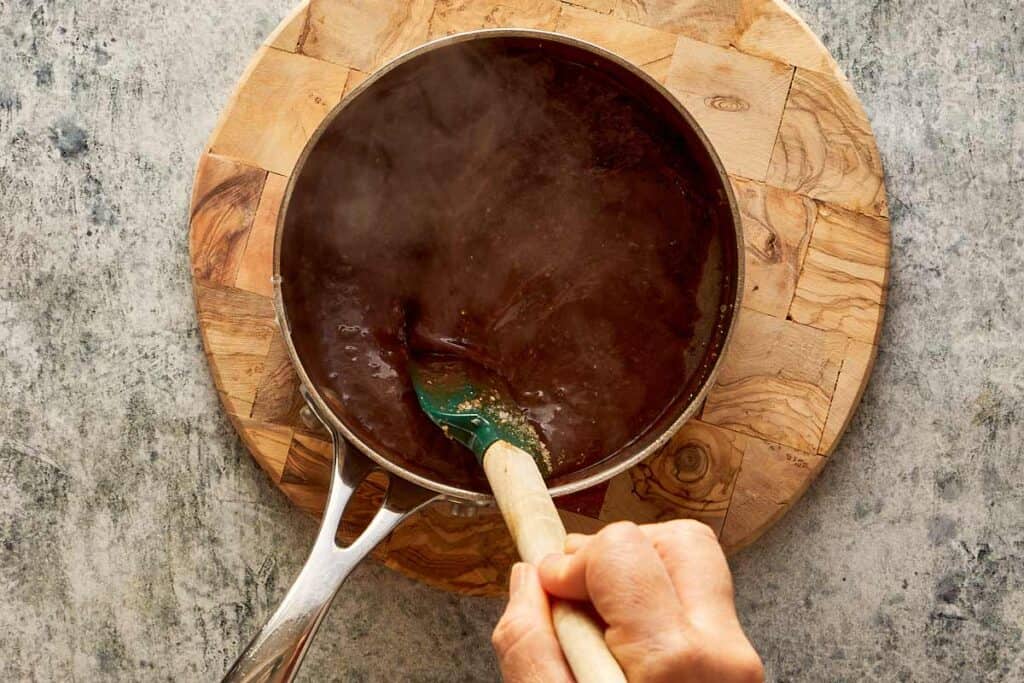
- The Chef’s Finish: Turn off the heat. Whisk in the butter and that secret piece of dark chocolate until melted and glossy. Finally, stir in the truffle paste and season with salt to taste.
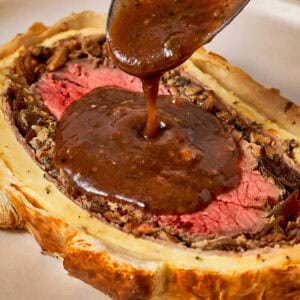
To Serve: Slice the Wellington into thick, generous slabs. Serve with the Truffle Sauce poured around the base of the beef (don’t pour it over the crispy pastry!).
What to serve with Beef Wellington
There are so many options with for pairing when it comes to Beef Wellington, if you’ve already got the truffle out Homemade Truffle Fries go well also Cheesy Garlic Roasted Asparagus, Roasted Mushrooms, Browned Butter Roasted Potatoes. But there is no denying the obvious (and best) choice is Mashed Potatoes.
Common FAQ’s
Three things: Cook the liquid out of the mushrooms completely (it should look like a dry paste), wrap the beef in a crêpe to absorb juices, and bake the Wellington on the lower rack of the oven if your oven runs cool.
Yes! You can assemble the Wellington (up to step 7 in the recipe), wrap it tightly in plastic, and store it in the fridge for up to 24 hours before baking. Actually, the longer it chills, the better it holds its shape!
Use a thermometer
125°F – 130°F (52°C – 54°C): Rare to Medium-Rare (Recommended)
135°F (57°C): Medium
Note: The beef will continue to cook as it rests, rising about 5-10 degrees.
You might also like

Get a free eBook!
Subscribe to Cafe Delites FOR FREE and receive recipes straight into your inbox!
Beef Wellington with Truffle Red Wine Sauce
Ingredients
Stage 1, The Prep
- 1.3 lb Beef fillet tenderloin, center cut.
- 2 tbsp Olive Oil for frying
- ½ tbsp salt to taste for the meat
- ¼ tbsp pepper to taste for the meat
- 2 tbsp Dijon Mustard
- 18 oz mushrooms fresh, Cremini, Swiss Brown or Button
- 1 tbsp butter for frying
- 2 large shallots finely chopped
- 1 tsp onion powder
- 2 tsp thyme leaves chopped
- 1 tbsp garlic paste or 3 cloves of fresh garlic crushed
- 1 pinch salt for the Duxelles to taste
- 1 pinch pepper for the Duxelles to taste
- 1 tbsp fresh parsley chopped
For the Thyme Crêpe
- 2 large eggs
- ⅔ cup all purpose flour
- ½ cup milk
- 1 pinch salt to taste
- ½ tbsp fresh thyme leaves chopped
Stage 2, The Assembly
- 12 slices Prosciutto thin sliced
- 18 oz pure butter puff pastry
- 2 large egg yolks for the egg wash
- 1 tbsp water for the egg wash
Stage 3, The Bake & Sauce
- 1 cup red wine cabernet sauvignon (see blog above)
- ½ cup madeira or port wine
- 1 large shallot minced
- 10 black peppercorns crushed
- 2 cups beef stock low sodium
- 1 tbsp cornstarch with a splash of water
- 1 tbsp butter unsalted
- 1 piece dark chocolate about 10g (1 teaspoon)
- 1 tbsp truffle paste or 1 small truffle
- 2 pinch salt to taste
Instructions
Stage 1, The Prep
- Coat the beef with olive oil and season generously with salt and pepper. Sear quickly in a smoking hot pan on all sides until browned (max 30 seconds per side). We aren't cooking it, just coloring it. Set aside to cool completely. Once cool, brush strictly with Dijon mustard.
- Clean mushrooms and place in a food processor. Pulse until finely chopped (resembling coarse sand). Melt butter in a pan over medium heat. Add mushrooms, shallots, and onion powder. Add thyme, garlic paste, salt, and pepper. Cook for roughly 20 minutes, stirring, until all liquid has evaporated and the mixture is a dry paste. Stir in parsley. Chill completely.
- Make the Crêpe: Whisk eggs, flour, milk, salt, and thyme until smooth. Pour into a lightly oiled non-stick pan to make large, thin crêpes (make 2-3 just in case). Set aside to cool.
Stage 2, The Assembly
- Layering: Lay a large sheet of plastic wrap on your bench. Arrange prosciutto slices in a slightly overlapping rectangle. Spread the cold mushroom duxelles evenly over the ham.
- The First Roll: Place the beef fillet at the bottom of the rectangle. Use the plastic wrap to lift and roll the beef tightly into the ham and mushrooms. Twist the ends of the plastic like a candy wrapper to create a tight log.
- The Chill (Crucial): Refrigerate this log for at least 1 hour.
- The Crêpe Roll: Unwrap the beef. Lay out fresh plastic wrap, place your thyme crêpe down, and place the beef log on top. Roll it up so the crêpe encases the ham. Wrap tightly and chill for another 30 mins.
- The Pastry: Unroll puff pastry. Remove plastic from beef. Place beef on pastry and roll to encase, overlapping edges by 1 inch. Seal with a little egg wash. Place seam-side down on a lined baking tray.
- Decorate: Brush entire pastry with egg wash (yolks + water). Use the back of a knife to score a pattern or use extra pastry to make leaves. My secret to this is to use another sheet of pastry and use a Pastry Lattice Roller Cutter. See my video on how to make this.
Stage 3, The Bake & Sauce
- Bake: Preheat oven to 400°F (200°C). Bake for 15 minutes, then reduce heat to 350°F (180°C) and bake for another 25-30 minutes until golden deep brown. (Aim for 127°F / 53°C internal temp).
- Rest: Let it rest for 15 minutes. This keeps the juices in the meat, not on your cutting board.
- The Truffle Sauce: While baking, boil red wine, Madeira, shallot, and peppercorns until reduced by 3/4. Add beef stock and boil 3 minutes. Strain to remove peppercorn and shallot remains.
- Finish: Mix cornstarch with a splash of water and whisk into sauce to thicken. Turn off heat. Whisk in butter and dark chocolate until glossy. Stir in truffle paste. Salt to taste.
- To Serve: Slice the Wellington into thick, generous slabs. Serve with the Truffle Sauce poured around the base of the beef (don't pour it over the crispy pastry!).
Video
Notes
- Fresh vs. Dried Mushrooms I highly recommend using fresh Cremini or Swiss Brown mushrooms for the best texture. If you must use dried, use 3 oz (80g). You must soak them in boiling water for 20 minutes, drain them, and then squeeze them violently dry in a tea towel. Any excess water will ruin your pastry.
- The “Soggy Bottom” Prevention The most common mistake is undercooking the mushrooms. You must cook the duxelles until it is a thick, dry paste that sticks to the pan. If it looks wet, keep cooking!
-
Make Ahead / Freezing:
- Fridge: You can assemble the Wellington fully (up to step 8), wrap it tightly in plastic, and refrigerate for up to 24 hours before baking. This actually helps it hold its shape better!
- Freezer: You can freeze the uncooked log (wrapped in plastic, then foil) for up to 1 month. Thaw in the fridge for 24 hours before baking.
- The Alcohol-Free Sauce If you do not consume alcohol, swap the Red Wine and Madeira for high-quality Beef Stock (low sodium). Add 1 tbsp of Balsamic Glaze or Worcestershire sauce to mimic the depth of flavor.
- Pork Substitute If you do not eat pork, substitute the Prosciutto with Bresaola (air-dried beef) or very thinly sliced Turkey Ham. Alternatively, use a layer of blanched spinach (squeezed completely dry).
- Don’t have a Food Processor? You can chop the mushrooms by hand, but you must chop them extremely finely (almost like mince). Large chunks of mushroom will make the Wellington lumpy and difficult to roll tight.
- Oven Temperatures All ovens vary. If your Wellington is browning too fast but the internal temp is still low, loosely cover the pastry with foil for the last 10 minutes of baking.
- The “Secret” Ingredient Do not skip the dark chocolate in the sauce! It acts as an emulsifier, giving the sauce a professional glossy shine and a velvety texture that butter alone cannot achieve. It does not make the sauce sweet.
Nutrition
Nutrition information is automatically calculated, so should only be used as an approximation.










Beef Wellington has been on my bucket list to make and i’m soo excited to make yours!!
Absolutely restaurant quality! The truffle and red wine sauce takes this to a whole new level. The beef was perfectly tender and the pastry stayed beautifully crisp. It’s the ultimate showstopper for a special dinner. My family loves it!
This looks amazing! I am thinking about trying it for our Christmas dinner, but we will be serving 6 adults and 1 child. We have a whole tenderloin so it weighs much more (4.25 lbs.) than 1.3 pounds. Can I double this recipe? I see that you have it listed as feeding 6 people. But it looks so delicious that I don’t know if it will feed HUNGRY adults! 🙂 Thank you!
Hi Madelaine, Wow that’s a huge tenderloin! Ok, I want you to get this right, but I have never attempted to make such a large piece. That being said, I have spoken to my team and we have brainstormed some ideas. You will want to buy double the mushrooms and prosciutto to cover that extra length, and you will definitely need at least double the quantity of puff pastry (may need more just in case). You can simply overlap the pastry sheets slightly and press the seams together to create one long rectangle large enough to encase the entire log.
The most important trick for roasting the whole 4.25 lb loin is to manage the tapered end so it doesn’t dry out. You should perform a tail tuck by folding the thin, tapered end of the meat underneath itself to create a uniform thickness along the entire length of the roast. You can tie this section with kitchen twine to hold the shape while you sear it—just remember to remove the string before wrapping it in the pastry!
Finally, be prepared for a slightly longer cook time due to the increased mass, likely around 45 to 55 minutes. However, because the pastry acts as an insulator, it is crucial not to rely solely on the clock. Start checking the internal temperature around the 35-minute mark and pull it out of the oven exactly when it hits 125°F (52°C) in the center. This will ensure you get that perfect medium-rare doneness from end to end for your hungry guests! Please let me know how it goes, and have a Merry Christmas with your family! Xx
My goodness, this looks so amazing! I love that you show every step in great detail, I want to be bold enough to take this gorgeous recipe on!
Hi Lina, You definitely should give it a go! The taste is incredible and so indulgent! Please let me know how you go! Xx