
This post may contain affiliate links. Please read our disclosure policy.
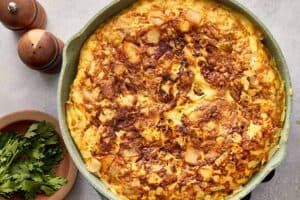
Spanish Omelette (Tortilla Española) is made with potatoes, eggs and onion, cooked slowly in extra virgin olive oil until soft and set into a thick, sliceable omelette. It’s simple, filling, and can be served warm or cold, making it perfect for anything from quick meals to a tapas-style spread. Best park? It’s very quick and versatile, so this is about to become your go-to breakfast.
It’s naturally gluten-free and works for picnics, parties, BBQs, or as part of a tapas-style meal. You can also serve it with a simple side like a fresh tomato salad or a light avocado corn salad to make it more filling without overcomplicating it.
I’ve tested this recipe multiple ways, adjusting how the potatoes are cut, how long they cook, and how much oil to use to get that soft, creamy center without the omelette falling apart. This version of an easy Spanish omelet keeps it simple and reliable, so you get the right texture every time without overthinking it.
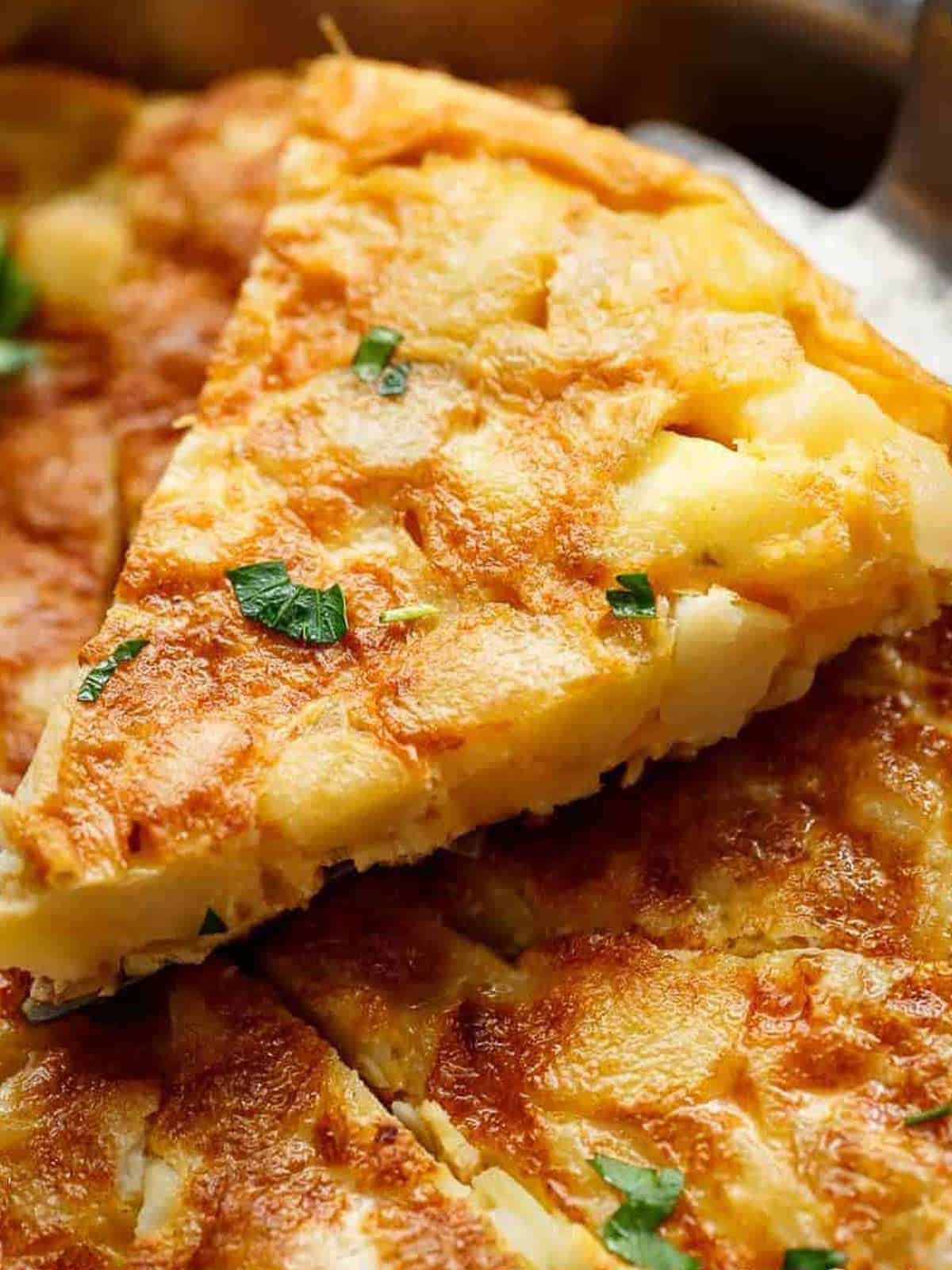
What Is A Traditional Spanish Tortilla?
Unlike a classic omelette, this version is thicker and cooked more gently, allowing the potatoes to soften without browning too much. The key is controlling the heat and giving the ingredients enough time to cook through evenly.
Ingredients
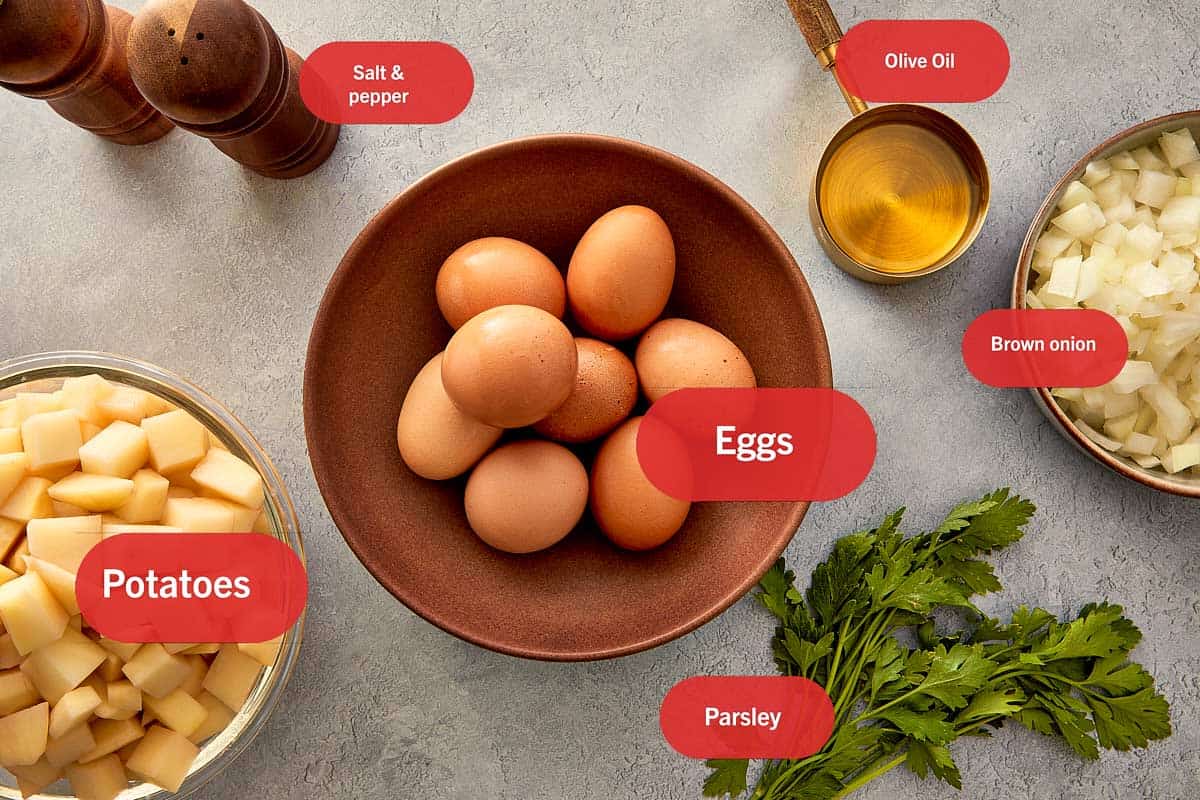
- Eggs: One of the most common mistakes is using too few eggs, which makes the omelette dry and more likely to fall apart. You need just enough eggs to fully coat the potatoes and hold everything together.
- Potatoes: Using starchy potatoes like Russets can make the texture too soft and crumbly. For a better result, use waxy potatoes like Yukon Gold or red potatoes so the omelette stays creamy but holds its shape.
- Onion: Cooking the onion too quickly or skipping it altogether is a missed opportunity for flavour. It should be cooked slowly with the potatoes so it softens and adds a subtle sweetness without browning too much.
- Seasoning: A common mistake is only seasoning the eggs at the end. The potatoes need to be seasoned while they cook, otherwise the final result can taste flat.
- Olive Oil: Cooking the potatoes on heat that’s too high will fry them instead of softening them. The goal is to gently cook them in the oil until tender, not crispy.
Note: Please see recipe card at the bottom for list of full ingredients and measurements
Tips and Variations for the Perfect Spanish Omelette
One of the biggest mistakes when making a Spanish Omelette (Tortilla Española) is rushing the potatoes. They shouldn’t fry or brown, but gently cook in the oil over low heat until completely tender.
Another key step that often gets overlooked is draining the oil. After cooking the potatoes and onion, remove most of the oil before adding the eggs. Too much oil will weigh the omelette down and make it greasy instead of smooth and cohesive.
When you mix the eggs with the potatoes, let it sit for a minute or two before cooking. This allows the potatoes to absorb some of the egg, helping everything hold together better once it sets.
Pan size also makes a difference. A smaller pan creates a thicker omelette with a soft center, while a larger pan will spread the mixture too thin and cook it too quickly. A 9-inch pan or a 12-inch pan are the ussually recommended for this dish.
Flipping is usually the most intimidating part, but it comes down to confidence and timing. This is my little technique:
- Use a plate slightly larger than your pan, place it firmly on top, and flip in one quick motion.
- It’s important to flip while the center is still slightly soft, as waiting too long can cause it to crack.
- Once flipped, slide it back into the pan gently to keep its shape intact.
If you’d rather not flip it, you can finish it under the broiler. Cook the base on the stove until mostly set, then transfer the pan to the oven for a few minutes until the top is cooked through. It won’t be exactly the same, but it’s a reliable alternative.
You can also adjust the recipe slightly depending on what you like. Adding chorizo brings a deeper flavour, bell peppers add a bit of sweetness, and cheese makes it richer and softer inside. Just keep the additions simple so the potatoes and eggs remain the focus.
How To Make Spanish Omelette (Tortilla Española)
This tortilla has been in my life for as long as I can remember. It was with me at breakfast times when I couldn’t look at another bowl of cereal, with us at family barbecues and picnics, with me through breakups, and saved me from eating plain eggs AGAIN when I couldn’t stomach any more plain, scrambled eggs or simple egg dishes. Of course, on days when I’m in the mood to put in a bit more effort, I turn something like a cheesy bacon and egg hash or a full breakfast spread with garlic butter mushrooms made on one pan.
Making a good tortilla española isn’t about complicated steps, it’s about controlling the texture at each stage. I’ve tested this a lot over the years, first time in Spain, and I learned that the biggest difference comes down to how you cook the potatoes and when you decide to flip it.
- Cook the potatoes gently, not crispy:
This is where most people go wrong. If the heat is too high, the potatoes start to fry instead of soften. I always keep the heat moderate and let them cook slowly in the oil. You’re looking for tender potatoes that you can easily break with a spatula, not crispy edges.
- Let the onions soften fully
I add the onions once the potatoes are partially cooked so they don’t burn. Let them cook until soft and slightly sweet. If you rush this step, the onion stays sharp and the flavor won’t be as balanced.
- Drain the oil properly
This step makes a big difference. I didn’t use to drain enough oil and the tortilla always came out too heavy. Removing most of the oil keeps the texture light and helps the eggs set properly instead of turning greasy.
- Get the egg mixture right
You don’t need anything fancy here, just well-beaten eggs with seasoning. What matters is making sure the potatoes are evenly coated once you pour them in. If some areas are dry, the tortilla won’t hold together as well.
- Let it set before touching it
Once the eggs are in, don’t keep stirring. I gently move things around at the beginning, then leave it alone. You’ll know it’s ready when the edges are set and the center still has a slight movement. That’s the point where it holds together but isn’t overcooked.
- Flip it while it’s still slightly soft
This is the part that intimidates most people. I used to wait too long and it would crack. Now I flip it while the center is still a little soft, using a plate and doing it in one quick motion. Waiting too long makes it harder, not easier.
Finish cooking to your preference
After flipping, you can cook it a little longer if you prefer it fully set, or keep it slightly soft in the center. I usually go for a just-set middle so it stays tender when sliced.
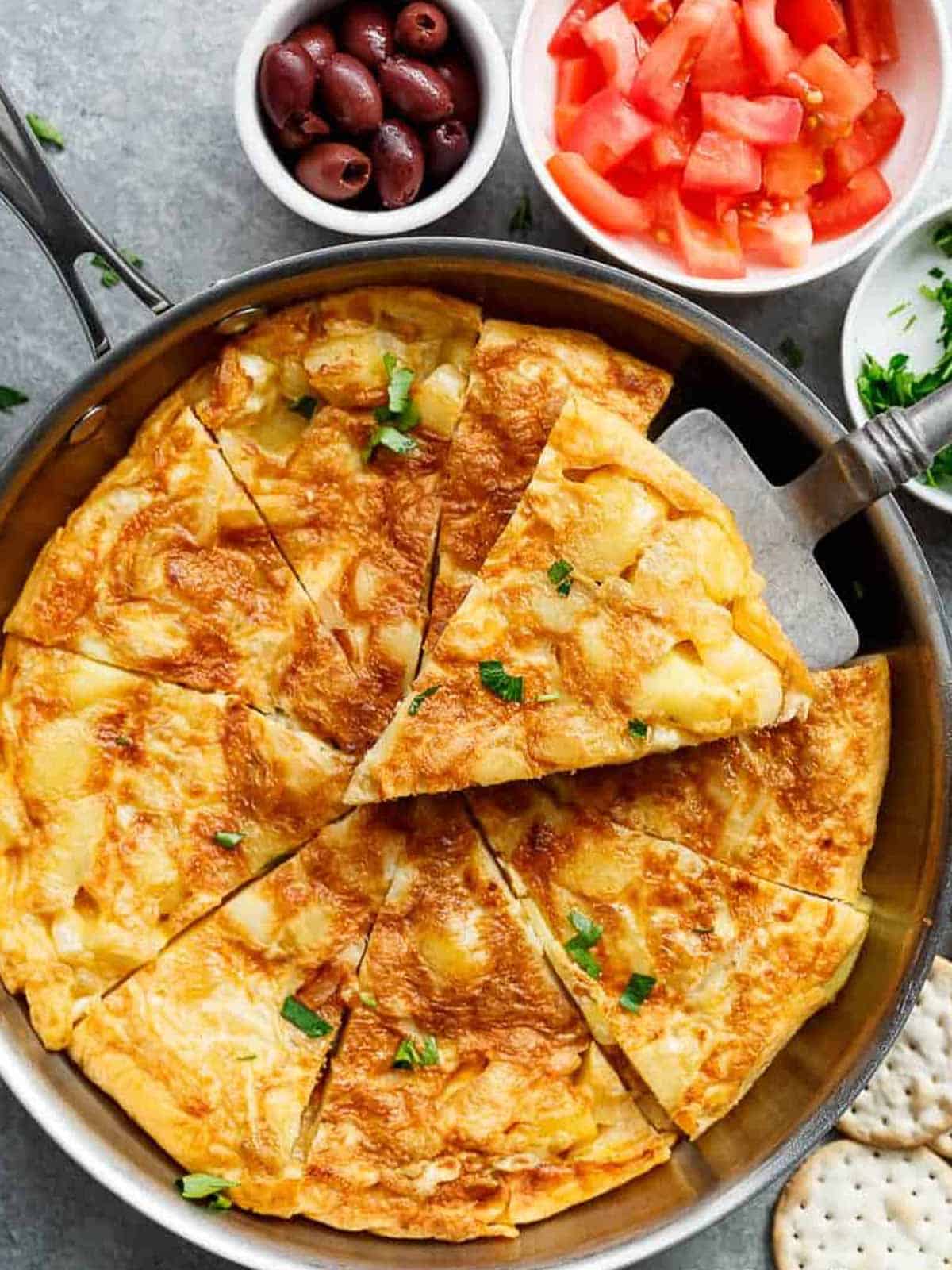
Serve this Spanish Omelette with something simple like a slice of crusty artisan bread, or go for something warmer and more filling like a Caprese-style grilled cheese.
If you’re after something lighter, a fresh option like an avocado feta salad or the caprese stuffed with avocado works really well on the side without overpowering it.
And if you’re putting together a bigger breakfast spread, you can add a few extras like creammy scrambled eggs, a baked french toast casserole, bite-sized cauliflower egg cups or even a stack of blueberry pancakes with a whipped Dalgona coffee to finish.
Recipe FAQ’s
This usually comes down to structure. Either there weren’t enough eggs to bind everything together, or the potatoes were cut too large and didn’t cook evenly. It can also happen if you try to flip it when it’s either too soft or already overcooked.
The edges should be fully set, while the center still has a slight softness when pressed. It will continue to cook from residual heat after removing it from the pan, so don’t wait until it feels completely firm.
Yes, even if they have the same same, a tortilla española is a ticker omelette with potatoes and eggs. A Mexican tortilla is way thiner and it’s made from corn or wheat flour, classic ingredients for the base of tacos.
It doesn’t include ingredients like flour, milk, or fillings such as meats and vegetables. While you can add extras if you like, the classic version keeps it simple and focused on the potatoes and eggs.
You might also like

Get a free eBook!
Subscribe to Cafe Delites FOR FREE and receive recipes straight into your inbox!

Spanish Potato Omelette (Spanish Tortilla)
Ingredients
- 1/2 cup olive oil
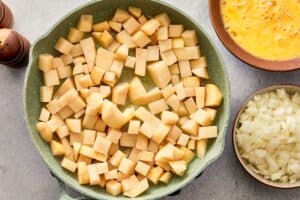
- 5 potatoes diced into 1-inch pieces (yukon gold potatoes are my favorite here!)
- 1 brown onion chopped
- 8 eggs
- 1 pinch salt to taste
- 1 pinch cracked pepper to taste
- 1 pinch parsley to garnish, optional
Instructions
- Heat the olive oil in a nonstick medium-sized (30cm/12-inch) pan over medium heat.

- Add the diced potatoes and cook gently, stirring occasionally, until they begin to soften.
- Continue cooking the potatoes until tender with lightly golden edges (not crispy).
- Add the chopped white onion to the pan.
- Cook the potatoes and onion together until the onion is soft and translucent.
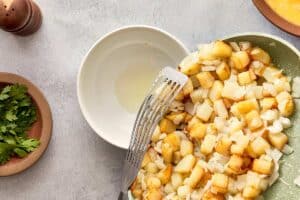
- Drain most of the oil using a colander or by carefully removing excess oil from the pan. Return the potato and onion mixture to the pan and spread evenly. Reduce heat to low.
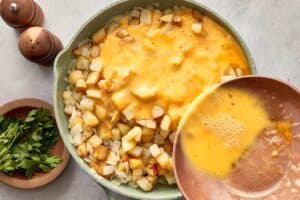
- Beat the eggs with salt and pepper in a bowl and pour the egg mixture over the potatoes and onions.
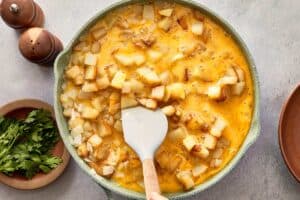
- Gently move the mixture with a spatula to evenly distribute the eggs and help them cook through.
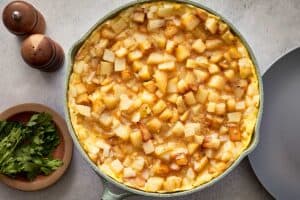
- Cook until the edges are set and the center is still slightly soft.
- Place a large plate over the pan and carefully flip the tortilla onto the plate.
- Carefully flip the tortilla onto the plate.
- Slide the tortilla back into the pan to cook the other side.
- Cook until fully set and golden underneath. Flip again onto a plate and garnish with parsley if desired.
- Slice and serve.







Notes
- If it turns out dry, it’s been overcooked. Remove it while the center still has a slight softness.
- If the texture feels uneven, your potatoes may have been cut too large or inconsistently.
Nutrition
Nutrition information is automatically calculated, so should only be used as an approximation.
Storage, Reheating, and Freezing
Let the tortilla cool to room temperature before storing. Once cooled, transfer it to an airtight container or cover it tightly and refrigerate for up to 3–4 days. You can store it whole or sliced, making it perfect for a quick snack or light meal at any time of day.
To reheat, place a slice in a nonstick skillet over medium-low heat and warm it gently on the stovetop. This helps keep the texture soft without drying it out. You can also use the microwave for convenience, heating in short intervals and covering with a damp paper towel to retain moisture.
You can freeze tortilla española, although the texture may change slightly. Let it cool completely, then wrap slices individually and store in a freezer-safe container for up to 1 month. Thaw overnight in the fridge and reheat in a frying pan over medium-low heat until warmed through.










Spaniard here. If you want it to actually taste like it’s supposed to taste you have to mix the fried potatoes and onion with the egg in a bowl (not in the pan) and let them sit for at least an hour but preferably over night. This is essential since the flavor changes a lot. If you want to cut some time you could also cut bigger pieces of potato and once you mix it with the ge you can smash it a little bit. This was the flavor develops faster but you still have to wait for at least 10 mins. Hope this helps <3