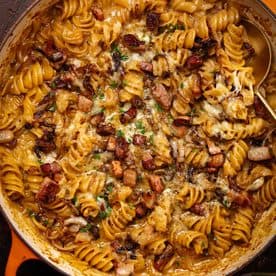
French Onion Soup Pasta Recipe
French onion soup inspired decadent pasta recipe for weeknight meals with a little pancetta
Servings: 6 serves
Ingredients
- ¾ cup pancetta chopped
- 3 medium onions thinly sliced
- 2 tbsp butter
- salt and pepper to taste
- ⅓ cup White wine to deglaze
- 1 tsp thyme fresh or dried
- 10.8 oz pasta
- 2 ½ cups beef broth
- 1 tbsp Worcestershire sauce
- ½ cup Heavy cream
- 4 cloves garlic
- 1 ½ cups gruyere cheese
Instructions
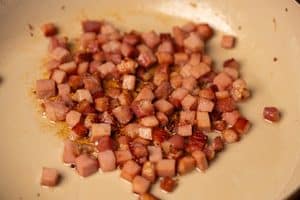
- Start cooking the pancetta until brown in a pot or pan. Set aside.
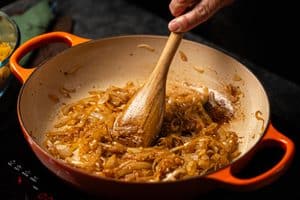
- Thinly slice the onions and add them to the same pot with melted butter and a pinch of salt, pepper and garlic. Cover for 5 minutes over medium heat to soften, then uncover and stir occasionally until deeply caramelized.
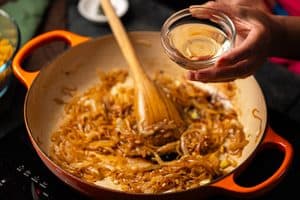
- Once the onions are caramelized, pour in white wine to deglaze the pot and lift those browned bits.
- Stir in thyme, add the pasta, then pour enough beef broth to just cover the pasta. Add a splash of Worcestershire sauce for depth.
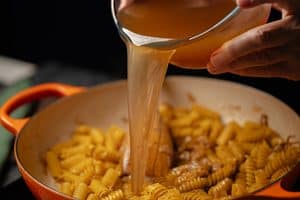
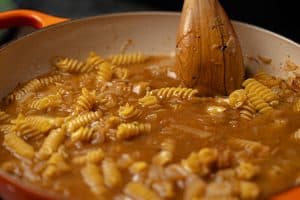
- Bring to a boil, then simmer, stirring occasionally until the pasta is cooked and has absorbed much of the liquid.
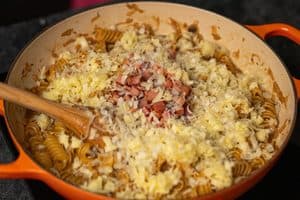
- Remove from the heat and stir in heavy cream, then add a generous amount of Gruyère and the pancetta. Mix until creamy and well combined.
Add a small splash of water every few minutes and scrape the browned bits from the bottom; this helps the onions caramelize faster and adds flavor.
If the liquid evaporates too quickly, cover the pot briefly.
Video
Notes
Storage, Reheating, and Make Ahead
- Fridge: Let any leftovers cool down completely, then transfer them to an airtight container and store them in the refrigerator for up to 4 days.
- Reheating: Add a splash of beef broth, milk, or water before warming the pasta in a skillet over medium-low heat (or in the microwave in 45-second bursts). Stirring in that extra liquid loosens the Gruyère and cream back into a smooth sauce so the noodles do not dry out.
- Freezer: I do not recommend freezing the finished pasta. Dairy-heavy sauces made with heavy cream and melted Gruyère tend to split and turn grainy once thawed, and the pasta gets mushy.
- Make Ahead: Since browning the onions takes the most hands-on time, you can fry the pancetta and caramelize the onions in butter up to 3 days in advance. Keep that onion base in an airtight container in the fridge, then just warm it up in your pot and jump straight to deglazing with the white wine on the night you want to eat.
Slice your onions from root to stem (with the grain) rather than in rings across the middle. Cutting with the grain keeps the onion fibers intact during slow cooking, so you end up with long, jammy strands that wrap around the pasta instead of melting into mush.
Nutrition
Calories: 606kcal | Carbohydrates: 41g | Protein: 23g | Fat: 37g | Saturated Fat: 17g | Polyunsaturated Fat: 5g | Monounsaturated Fat: 14g | Trans Fat: 0.04g | Cholesterol: 83mg | Sodium: 968mg | Potassium: 334mg | Fiber: 2g | Sugar: 3g | Vitamin A: 895IU | Vitamin C: 2mg | Calcium: 397mg | Iron: 1mg