
Cornbread Recipe
A super moist, buttery cornbread with a fluffy centre, crisp edges and the perfect crumb - this is the cornbread recipe you've been searching for!
Servings: 12 serves
Ingredients
- 1/2 cup unsalted butter melted, or bacon drippings
- 1 cup all-purpose flour
- 1 cup yellow cornmeal or polenta
- 1 tablespoon sugar optional
- 2 teaspoons baking powder optional: yields a fluffier cornbread
- 1/2 teaspoon baking soda
- 1/2 teaspoon salt
- 1 1/2 cup buttermilk shake before measuring
- 2 eggs large
Instructions
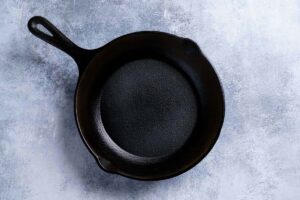
- Lightly grease a 9-inch cast iron skillet or 9-inch square baking dish with butter and place skillet/dish into the oven to heat up.
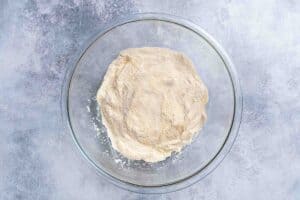
- In a large bowl, whisk together the flour, cornmeal, sugar, baking powder (If using), baking soda and salt.
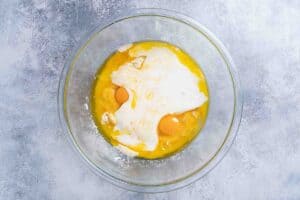
- Add the buttermilk and eggs. Stir them together first, then pour in the cooled, melted butter. Fold everything together until just combined.
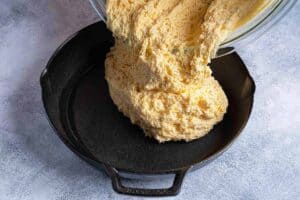
- Carefully remove your 'hot' pan or dish from the oven with oven mitts, and pour the batter into the hot skillet or dish. Listen to that sizzle! That's what you want.
- Bake until the cornbread begins to brown on top and a toothpick inserted in the centre comes out clean (about 20-23 minutes).
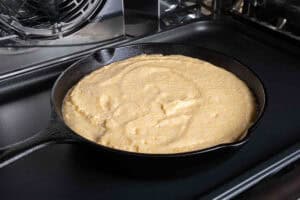
Preheat the oven to 200°C | 400°F and position a rack in the middle.
Alternatively, for cast iron skillets: heat 1/2 cup of unmelted butter in a cast iron over the stove top on medium heat until melted, turn the heat off, then allow the butter to cool slightly before adding to the batter.
If you’re adding extra ingredients like shredded cheese, jalapeños, or fresh corn kernels, now’s the time to gently fold them in.
Be careful not to overmix the batter at this stage; overmixing is the easiest way to ruin the texture.
Allow to cool for about 10 minutes before slicing and serving.
Notes
Storage, Reheating, and Make Ahead
To keep your leftover bread from drying out, always let it cool completely first. Storing it while it is still warm traps condensation, which will ruin the crust.- Room Temperature & Fridge: Keep it in an airtight container at room temperature for up to two days. For longer storage, keep it in the fridge for up to a week.
- Freezer: I like to wrap individual squares tightly in plastic wrap and place them in a freezer-safe bag. They freeze beautifully for up to three months. Just thaw them at room temperature when you are ready to eat.
- Reheating: To bring back that fresh-out-of-the-oven texture, wrap your pieces in aluminum foil and warm them in the oven at 350°F (175°C) for about 10 minutes. A quick zap in the microwave works if you are short on time, but the oven method keeps the crumb tender instead of rubbery.
If you don't have buttermilk, you can make your own! Add 1 tablespoon of white vinegar (or freshly squeezed lemon juice) to 1 1/2 cups of room-temperature milk (full cream, 2%, or skim can be used). Mix and let sit for 5 minutes. Done! Prepare your 'buttermilk' as step one of this recipe to ensure it has soured enough before adding to your mixture.
Nutrition
Calories: 190kcal | Carbohydrates: 20g | Protein: 4g | Fat: 10g | Saturated Fat: 6g | Polyunsaturated Fat: 1g | Monounsaturated Fat: 3g | Trans Fat: 0.3g | Cholesterol: 51mg | Sodium: 257mg | Potassium: 107mg | Fiber: 2g | Sugar: 3g | Vitamin A: 326IU | Calcium: 82mg | Iron: 1mg