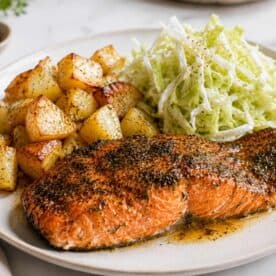
Air-fried Salmon potato and cabbage salad
Lower fat, healthy cooked, quick lunch or dinner under 30 mins
Servings: 1 serve
Ingredients
- 3½ oz baby potatoes low carbs diced ½ inch
- 1 teaspoon olive oil divided for fish and salad
- 1 pinch salt and pepper to taste
- 5 oz sockeye salmon fillet wild caught raw (or defrosted)
- 1 pinch lemon pepper seasoning
- 1 pinch garlic powder
- 1 pinch dried dill
- 1 cup green cabbage shredded
- 2 teaspoon apple cider vinegar
- 1 pinch salt and pepper to taste
Instructions
- Toss the potatoes with 1/2 tsp olive oil, salt, and pepper. Place them on one side of the air fryer basket.
- Rub the salmon fillet with the lemon pepper, garlic powder, and dill. Place it on the opposite side of the basket.
- Cook at 400°F (200°C) for 9-10 minutes until the potatoes are tender and the salmon flakes easily.
- While the air fryer runs, toss the shredded cabbage with the remaining 1/2 tsp olive oil, 1 tsp white vinegar, salt, and pepper. Serve immediately with the hot salmon and potatoes.
Notes
- Air fryer models vary in wattage and heat circulation. Check the salmon at the 8-minute mark to ensure you don't overcook it. The fish is done when it flakes easily with a fork or reaches an internal temperature of 145°F (62°C).
- Cutting the potatoes uniformly to exactly ½-inch (1cm) cubes is essential so they finish cooking at the exact same time as the salmon. If you prefer larger potato chunks, microwave the diced potatoes for 2 minutes to soften them before adding them to the air fryer.
- Pat the salmon fillet completely dry with a paper towel before rubbing on the spices. A light spray of olive oil over the top of the fillet before cooking will help the seasoning adhere and encourage browning.
- If you prefer a softer slaw, toss the shredded cabbage with the oil and vinegar while the salmon is first starting to cook. The acid will gently tenderize the leaves as they sit. If you prefer a sharper, more acidic bite, substitute white vinegar for apple cider vinegar.
- This salad is best enjoyed immediately while the salmon is hot and the cabbage is crisp. If you have leftovers, store the cooked salmon and potatoes in an airtight container in the fridge for up to 2 days. Store the cabbage separately and undressed to prevent it from becoming soggy.
- Salmon type matters. To keep the fat low and calories in check, you need to buy the fresh or frozen wildcaught sockeye fillet. Farmed salmon tends to have twice the fat levels which will blow out your calories for the day.
Nutrition
Calories: 337kcal | Carbohydrates: 22g | Protein: 31g | Fat: 13g | Saturated Fat: 2g | Polyunsaturated Fat: 4g | Monounsaturated Fat: 6g | Cholesterol: 78mg | Sodium: 162mg | Potassium: 1281mg | Fiber: 4g | Sugar: 3g | Vitamin A: 190IU | Vitamin C: 47mg | Calcium: 78mg | Iron: 3mg